

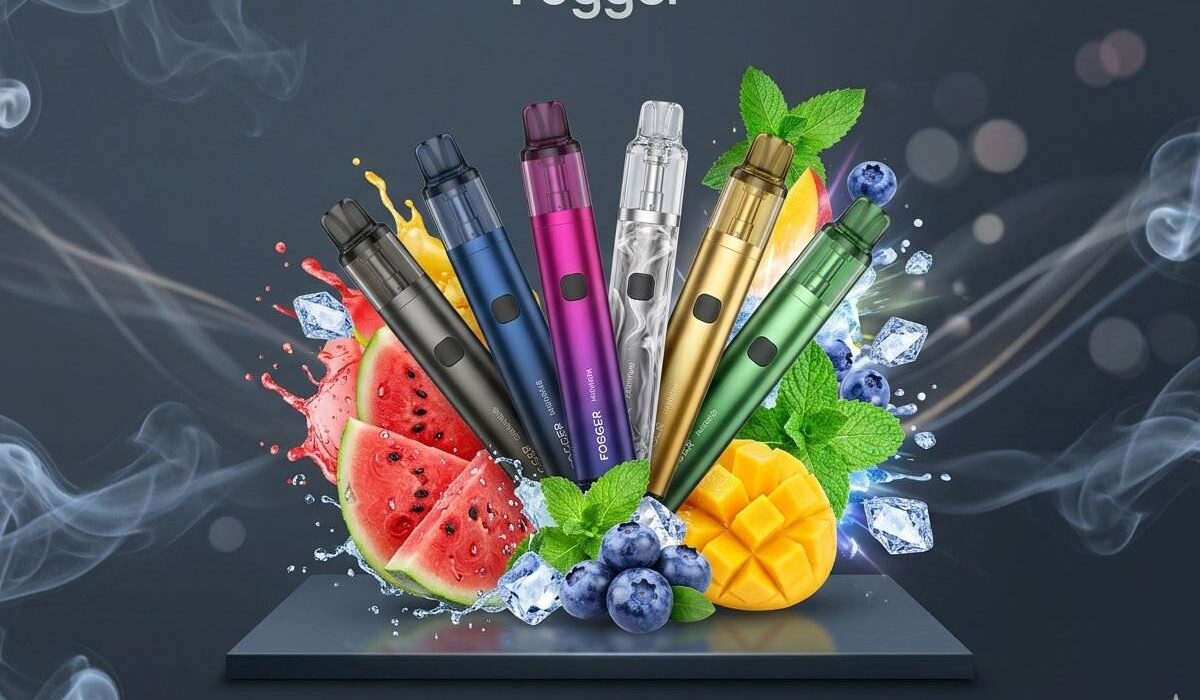
The phrase “fogger flavors” can mean different things depending on the product or brand being searched. This search term could describe a flavor name or an aerosol product. Different product categories will have varying information about ingredients and application details.
This discussion will address potential interpretations, the use of flavor designations, and the importance of product identification for fogger flavors.
It will also cover how to approach research, distinguish terminology, and apply proper definitions and specifications of fogger products.
What are Fogger Flavors?
The search phrase fogger flavors can refer to a number of different brands and products, depending on where this term is found online. In either case, the exact product name is needed in order to give an accurate overview.
The word “flavors” usually refers to food items, beverages, or scented products. The word “fogger” generally applies to equipment or to materials that can be used in an industrial setting.
It is important to distinguish between these product categories because of differences in ingredients, uses, and application guidelines.
Flavored products in general are usually intended for oral consumption. Fragrances and chemical formulations are generally not advised for ingestion, unless product instructions explicitly state otherwise.
Fogger products are generally associated with fogging machines or tools. In some cases, such equipment is used in a commercial or industrial setting, for reasons such as pest control or other sanitation procedures.
Aerosol sprays, insecticides, fire extinguishers, and theatrical pyrotechnics all involve specialized equipment and formulations that will require a specific product identification.
Equipment and specialized formulations are not interchangeable and should only be operated by trained personnel.
Why are People Seeking Information About Fogger Flavors?
People search for information about products which they have come across before, or which they plan to invest in.
Searching for general terms, such as fogger flavors, is usually not beneficial unless an individual wants to narrow this search phrase and get more specific results about one product and one brand.
Such terms can also be entered into search engines to determine potential similarities or differences.
Interpreting Product Names Based on Known Information:
In some cases, a product name or a brand might be known, but its application or its quality certifications might be unknown.
This general search phrase might also be entered for clarification, for comparison, or to confirm that certain information is not misleading.
Interpreting product names based on known facts, ingredients, and guidelines can help you spot differences between similar products.
Considering Flavors as Marketing Tools:
One popular use of the word “flavors” is for marketing purposes.
Aroma names usually apply to scented items or to food and beverage products intended for oral consumption.
Since flavor descriptions generally evoke a feeling rather than provide information about a product’s ingredients, they should not be used as the sole indicators of quality and safety.
Products with similar marketing might contain different substances and have different safety requirements.
If two similar products have completely different safety guidelines, then they most likely contain different formulations. The differences might range anywhere from mild to extreme.
Clarifying Product Details:
A search for fogger flavors might indicate that a person is looking for facts about ingredients, quality, safety, usage instructions, and other specifications.
In reality, product facts should always be verified on each product’s official label, manufacturer’s guidelines, and any other relevant resources.
Marketing usually states ingredients, recommendations, special indications, and other helpful warnings. Supplement this information with objective product research to separate factual details from subjective claims.
How Are Flavor Names Used in Product Marketing?
Products are often categorized and advertised by taste or the fragrance they emit.
Flavor names are usually found as descriptors of items that have been sweetened or that have been infused with food essence formulations or with essential oils. In some cases, such flavoring might resemble a food or beverage, but it is not meant to be ingested.
Flavor names can also apply to other types of products. A specific marketing strategy might turn a scientific name for a chemical compound into a familiar flavor name.
The application area will determine whether a substance is useful for health, safety, or requires additional precautions. This information might not appear on a product label or in a marketing description, even if it concerns fire resistance, allergenic potential, or recommended safety gear.
Flavor Names Are Not Inherently Inclusive of Ingredient Descriptions:
On a product front label or a back label, the term “flavor” can refer to any formulation in which the ingredient has been modified. This modification may use a combination of synthetic and natural additives. One example is a soft drink sweetener that turns an artificial sweetener into a more familiar flavor name.
Such formulations can also indicate a fragrance category, a drug use category, or a food additive group.
Essential oils are usually burned or diluted in a diffuser to release their scent and to turn into a vapor. Essential oils are generally safe if they do not irritate the respiratory tract. Use these products only in well-ventilated rooms.
Flavor name does not always indicate whether a product is safe or how it is meant to be used. Always follow the instructions.
Marketing Statements Should Be Viewed in a Larger Context:
Words such as “natural,” “fresh,” or “premium grade” can apply to various areas of industry, depending on how the product at hand works and what it is being used for. Marketing statements should be viewed within the context of that particular field and its regulations. In one area, a specific term might indicate a special precaution, while in another area it might suggest the opposite.
Fogger Flavors – Distinguishing Product Categories and Applications:
Fogger products are a class of equipment associated with fogging devices and materials used for them.
Fogging applications most commonly involve one of the following four classes of machines and procedures:
- Theatrical pyrotechnics
- Commercial pest control or fire suppression
- Industrial safety and cleanliness procedures
- Sanitation procedures or other safety procedures.
In all of these cases, an aerosol or a pressurized liquid needs to be compatible with the equipment that utilizes it. Compatibility also determines whether exposure is harmful or can be considered a safe treatment.
Equipment that creates artificial fogs is commonly used in pest control treatments. These treatments are generally not advised for inhalation or for application near humans and pets.
In other cases, fogger devices and aerosol sprays are utilized as a part of a fire prevention or fire suppression system. Such devices generally aren’t compatible with any additive not explicitly stated in their instruction manual.
Product Ingredients and Safety Guidelines:
Product instructions and ingredients are essential for understanding the properties and the potential effect of a substance that one decides to introduce into their home or into their business environment.
The combination of ingredients and application methods can make a world of difference in these products. One formulation might be used as a fragrance or as an insect repellent. Another product that utilizes a combination of the same ingredients in a different proportion might be highly toxic.
Review a Product Label:
Instructions should be reviewed carefully. A product label should state the product application, the brand or manufacturer’s name, and explicit warnings.
Depending on the product classification, one might find additional information regarding ingredients or product storage instructions.
If product information does not state explicitly what a product does and how it is meant to be used, then such research should not be attempted without the help of a professional in the field.
Avoid Flavor Assumptions and Always Follow Product Guidelines:
An item that is consumed orally will most likely have a flavoring that resembles its intended purpose. Similar designations can be applied to essential oils and to other substances, which are generally not recommended.
Flavor designation is not an indication of a substance’s safety guidelines or of its applications and precautions. Safety precautions depend on the ingredient type and do not necessarily depend on the branding.
A product that is explicitly meant to enhance or change the taste or scent of an ingredient will most likely also require special precautions.
One’s research should include safety information, ingredient list, and product classification. Following these instructions explicitly is the best way to ensure personal safety and proper treatment.
Online Research Into Fogger Flavors – Practical Applications:
Researching terms such as fogger flavors can sometimes lead to incomplete guidelines and descriptions. Product categorization can get mixed up with other brands, marketing strategies, and keywords. A specific search engine query usually requires a certain level of specialization in order to acquire good results.
However, there are some practical steps that can be useful in conducting research on a term in this category. Following these practical applications can make online research into fogger flavors more structured.
Interpret the product based on known information. Distinguish between brands, product classes, and general applications.
Review the manufacturer’s instructions. Specific precautions that are recommended when utilizing such products should be noted.
Compare this information to a similar source. Depending on the product category, one might find relevant safety regulations on various websites.
Distinguish between marketing statements, advertising claims, and factual information.
Interpret the validity and the date of this research to account for eventual changes in ingredients or in safety precautions. Applying these straightforward steps will help you conduct research on fogger flavors or any other subject in this category.
Fogger Flavors: Questions that People Might Ask
What are fogger flavors?
Fogger flavors is an ambiguous phrase. Depending on the product and the brand, this question will have a different answer for each scenario. Therefore, one should provide clarification based on an official product description that comes from the manufacturer’s source.
Can food flavorings be substituted for specialized chemical products?
Unless otherwise stated, products such as food flavorings or essential oils should not be mistaken for specialized chemicals. Equipment such as fogger machines is usually not suited for consumer products unless you review the product label and confirm these instructions.
How should I interpret brand names when trying to identify a similar product?
Researching similar products will require identifying the brand and specific product information.
Can I rely on a product’s scent or taste to determine its general safety?
In most instances, such a factor cannot be applied. Unless otherwise instructed, one should treat any additive, essential oil, or insect repellent as a potentially hazardous substance.
Where Should I Find Information About Product Ingredients?
The ingredient safety, product application, and other regulations will vary, depending on its category and its application. Regulations can be checked against a government website if such an item needs to be used on a large scale.
Final Words:
Terms such as fogger flavors are usually applied in a marketing context. Flavor names usually do not contain accurate information about an ingredient list. Instead, such names are meant to help identify a product category and to choose one product over another, based on taste preferences.
People who seek information about keywords in this category should provide clarification when interpreting the meaning of a certain phrase. Determining the brand and distinguishing between products are equally important, as are reviewing product guidelines and instructions. Such a review should particularly focus on precautionary measures that come with utilizing such products.
In some cases, you may also need to distinguish between food additives and substances not suited for oral consumption. Never assume one product will serve the same function when applied to a different product category or brand unless official documentation specifies otherwise.
If you have a specific brand, product, or product category in mind, let us know; we will elaborate on this topic, provide more insights, and share product-specific keywords for your research.